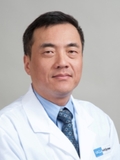
Yibin Wang, PhD
Position Title:Chair, UCLA Cardiovascular Research
Initiative Director, Division of Molecular Medicine
Vice Chair for Research of Anesthesiology
Professor, Anesthesiology
Professor, Physiology
Biography:
Dr. Yibin Wang is currently a Professor of Molecular Medicine in the David Geffen School of Medicine at UCLA. He is the Chair of Cardiovascular Theme at UCLA, the Vice Chair for Research and Director of the Division of Molecular Medicine in the Department of Anesthesiology and Perioperative Medicine. Dr. Wang received his Ph.D. in molecular genetics and cell biology from Baylor College of Medicine and post-doctoral training in neurobiology and molecular cardiology at The Scripps Research Institute and University of California at San Diego. Dr. Wang’s research mainly focuses on genetic and molecular mechanisms of heart failure and metabolic disorders. His lab has made major advances in uncovering stress-signaling mechanisms in the pathogenesis of heart failure, and revealed functional importance amino acids catabolism in heart failure and metabolic disorders. In addition, his lab reported novel regulatory mechanisms in cardiac transcriptome reprogramming involving RNA splicing regulation and non-coding RNA mediated epigenetic modulation. He has published over 163 peer-reviewed manuscripts in high quality scientific journals, including Nature Medicine, Journal of Clinical Investigation, Circulation, Circulation Research, and PNAS. Dr. Wang received an Established Investigator Award from American Heart Association in 2005. He was awarded the title of Chang-Jiang Scholar from Minister of Education of China in 2009, and Chinese National Expert for “Thousand Talent Plan” in 2011. He currently serves in the editorial board of Journal of Biological Chemistry, Circulation Research, and Journal of Molecular and Cellular Cardiology. Dr. Wang is the principal investigator of several NIH grants. He is a member of the leadership committees for AHA and ISHR North American Section. He has served in more than 30 Ph.D. thesis committees, and is currently the course master and Associate Director of the Molecular, Cellular and Integrated Physiology Ph.D. program at UCLA.
Research Interests:
Wang laboratory has been focusing on understanding the intracellular signaling networks involved in stress-response in mammalian cells, and translating that knowledge into potential therapies. The research progresses are centered on three related areas of investigations: 1). Discovering novel components in stress signal transduction networks; 2). Establishing functional and molecular links among signaling pathways; 3). Translating mechanistic insights into novel therapies in disease models of heart failure. Up to now, Wang’s lab has published 157 peer-reviewed scientific reports. The total H-index is 54 for all papers and H-index is 38 for publication since 2009. The 5 most significant areas of contribution and several recent publications with significant novelty and potential impact on the field of heart failure research and basic signal transduction are listed below. These studies illustrate the principal feature of our research by taking state-of-the-art experimental tools to explore frontier areas in biology and medicine.
Awards/Honors:2011-presentLeadership Council, Basic Cardiovascular Science, International Committee and Nomination Committees (AHA, BCVS);
2011-present Fellow of American Heart Association (AHA, BCVS)
2010-presentCouncil Member, ISHR, North American Section;
2009-2012Changjiang Scholar (Ministry of Education, China);
2005-2009Established Investigator Award of AHA;
2004Guident Foundation Visiting Professorship (Case Western Reserve University, Cleveland, OH)
2002Finalist (Research Award of Basic Science Council, AHA);
1999Grant-in-Aid (AHA Mid-Atlantic Affiliate);
1997F31 Trainee Fellowship (NIH, NHLBI Training Grant in Cardiac Hypertrophy);
1994Visiting Scholarship Award (Chinese Natural Science Foundation).
1993Student Scholarship Award (Association of Chinese American in Biosciences);
1989-1990Howard Hughes Medical Institute Pre-doctoral Fellowship;
1985-1986First Degree Academic Award (Fudan University).