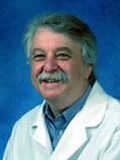
Enrico Stefani, MD, PhD
Position Title:Professor Emeritus, Anesthesiology
Professor Emeritus, Physiology
Research Interests:
- Super-Resolution Stimulated Emission Depletion (STED) Microscopy.
- Super Resolution Protein ATLAS Initiative: Heart, Vascular Smooth Muscle, Vascular Endothelium and Lung.
- Macromolecular Complexes in a Pressure-Overload Model of Cardiovascular Disease.
- Mechanisms of Rapid Estrogen Induced Cardioprotection.
- Changes of Protein Signaling Complexes Associated with Mitochondria during Cardioprotection and Ischemic Preconditioning.
- Molecular Identity of MaxiK Channel in Heart Mitochondria, mitoBKCa and its Role in Cardioprotection.
- First description of voltage dependent gating currents in expressed K + channels together with the development of a new methodology to record with high speed and resolution gating and ionic currents in frog oocytes.
- First description of ionic and gating currents of calcium channels expressed in oocytes gaining insight into the mechanism of beta subunit regulation by the increase of the coupling between charge movement and pore opening.
- Gating current noise produced by elementary transitions in Shaker K + channels revealing the presence of numerous fast transitions moving small amounts of charge.
- Series of papers on the mechanisms of the coupling between charge movement and pore opening on expressed K and Ca channels with their regulatory subunits.
- Discovery and first description of gating currents on expressed Ca2+ and voltage dependent ion channels (MaxiK)highlighting early voltage dependent and calcium independent transitions.
- Cloning and functional characterization of a TRP novel mammalian gene family underlying agonist-activated capacitative calcium entry where the activation takes place by the displacement of inhibitory calmodulin.
- Discovery of fast early component of gating currents between closed states due to a combination of drift diffusion and barrier jumping in the initial stages of channel activation.
- Characterization of heart hypertrophy during pregnancy with the discovery that heart possesses estrogen alpha receptors and that circulating estrogen donwregulates repolarizing K currents explaining arrhythmias in pregnancy.
- Discovery that estrogen can regulate K channel and serotonin receptors expression in myometrium by modulating gene activity and subcellular trafficking regulating contractility.
- Discovery of MaxiK mechanisms for subcellular trafficking: splice variant with dominant negative properties, endoplasm.
- Custom built state-of-the-art Super-Resolution Stimulated Emission Depletion (STED) Microscope with ~30-50 nm resolution.
- 2010 Outstanding Tutor Award for PBL teaching.